 Gardion
Gaming disorder in teens: what the ICD-11 diagnosis 6C51 means

Since 2022, video game addiction has had an official name and code. The World Health Organization's classification of diseases, ICD-11, lists it as gaming disorder, 6C51. A doctor makes this diagnosis when a person can't control their gaming, puts it ahead of the rest of their life, and keeps playing despite clear harm, and when family life, school, or friendships suffer badly as a result. The pattern usually lasts at least a year. The definition doesn't mention hours at all, and the WHO says the disorder affects only a small share of people who play. We went through the WHO wording line by line, compared it with the American psychiatric manual, traced where the different codes on clinic websites come from, and listed who to see. You can't diagnose your teen from an article, and we don't try to.
What ICD-11 says
The definition is one paragraph long. We read it in the 2025 print edition of ICD-11. It covers any kind of gaming: online or offline, on a console, a computer, or a tablet. There are three signs, and a diagnosis needs all three:
There's one more condition. The gaming has to cause real distress or seriously disrupt life at home, at school, or with friends. A boy who games a lot but keeps up with school, sleeps enough, and still hangs out with friends doesn't fit the definition, however many hours the screen time counter shows.
The pattern can be steady or come in waves: a month glued to the computer, then a lull, then the same again. The definition covers both.
- Impaired control over gaming. The WHO text spells out what that means: when gaming starts, how often, how intense it gets, how long it lasts, when it stops, and in what setting. At home it looks like this: your teen promises one match before school and starts a second and a third, plays late at night after you agreed otherwise, or says "I'm done, I'm quitting" and is back in the lobby an hour later.
- Gaming takes priority over the rest of life. Meals, sleep, practice, and plans with friends get pushed aside. Saturday soccer quietly drops off the calendar, and your son doesn't even notice.
- Gaming continues even though the harm is visible. Falling grades, a fight with a best friend, nights without sleep. Your teen sees it too and plays just as much, or more.
The 12-month rule, exclusions, and hazardous gaming
The signs normally need to be present for 12 months or longer. Six months of obsession with a new game is not enough for a diagnosis. The period can be shorter if every requirement is met and the symptoms are severe. If a teen has stopped going to school and won't leave their room, a doctor won't wait a year.
The code has two subtypes: 6C51.0 for mainly online gaming and 6C51.1 for mainly offline gaming.
Bipolar disorder is on the list of exclusions for 6C51. During a manic episode, a person may play for days on end, and the cause is a different illness. That's one reason a doctor makes the call: they check whether depression, anxiety, or another condition is behind the gaming.
For milder cases, ICD-11 has a separate entry, QE22, hazardous gaming. It describes gaming that noticeably raises the risk of harm to physical or mental health, through the hours spent, neglected responsibilities, or risky behavior around the game. Hazardous gaming is not classed as an illness. The WHO says this code fits when gaming already calls for attention and advice from a health professional but doesn't meet the bar for a diagnosis. We think this entry is the most useful one for parents: there's a wide space between "everything's fine" and "disorder," and you can see a doctor while your teen is still in it.
ICD-11 vs. DSM-5-TR: the differences
Clinic websites list three signs in some places and nine in others. ICD-11 has three. The American Psychiatric Association's manual, DSM-5-TR, has nine. It calls the condition internet gaming disorder and places it among conditions that need further study, so it isn't an official diagnosis in the US. We put both side by side.
Neither manual has a diagnosis for smartphones or social media. If the phone itself is what worries you, we cover that in the first article of this series: is your child addicted to their phone.
| ICD-11 (WHO) | DSM-5-TR (APA) | |
|---|---|---|
| Name | Gaming disorder, 6C51 | Internet gaming disorder |
| Status | Official diagnosis | Condition for further study |
| Signs | Three, all required, plus serious harm to daily life | Nine, including irritability when gaming is taken away, lying to family, and playing to escape a bad mood |
| Threshold | All three signs | Five of nine |
| Time frame | Usually at least 12 months, shorter if symptoms are severe | Five signs within 12 months |
| What counts | Video games, online or offline | Games only, not gambling |
| What's excluded | Gambling (it has its own code, 6C50) | General internet use, social media, smartphones, online gambling |
Gaming disorder in ICD-10
ICD-10 has no separate entry for video games, which is where the confusion starts. Some websites give F63.0 as the code for gaming addiction. In ICD-10, F63.0 is pathological gambling: casinos, betting, slot machines.
We checked the codes against the official mapping tables the WHO publishes with each ICD-11 release. They map gaming disorder (6C51) to F63.8, "other habit and impulse disorders," and gambling disorder (6C50) to F63.0. If a clinic page says F63.0 and the topic is Minecraft, someone has mixed up video games with betting. These are the WHO's own ICD-10 codes. Some countries use a national edition, so a local code may look slightly different.
Why researchers argued about it
The diagnosis made it into ICD-11 after a public debate. In 2017, a group of researchers led by Espen Aarseth published an open letter against the new code. They argued that the research was weak, that the criteria were borrowed from substance addiction and gambling, and that the label would hit millions of kids for whom gaming is an ordinary hobby. They were also worried about a moral panic and a wave of false diagnoses in children and teens.
In 2018, a group led by Hans-Jürgen Rumpf replied that putting the diagnosis in the manual would make treatment and prevention easier to reach for the people who need them. The WHO sided with them. It points out that treatment programs existed in many countries before the code did, and that the decision reflects agreement among experts from different fields and regions.
The debate shows up in the numbers. A 2021 review by Australian psychologists pooled studies from many countries and arrived at roughly 3% of people with gaming disorder. But the studies vary widely, and most of that spread came down to which questionnaire was used. So we treat headlines about a "generation of gaming addicts" with caution.
Our practical takeaway for parents: a doctor assigns the code after an assessment and a conversation with the family, and assigning it at home by eye tells you nothing. Calling your kid a "gaming addict" in the middle of an argument makes it harder to agree on anything, and it does nothing for the small number of teens who really need help.
What you can notice at home
An online quiz won't give you a diagnosis. What you do have is something a doctor can't see in a fifteen-minute appointment: how your teen lives month after month. So we suggest watching and writing things down.
Translate the three WHO signs into everyday life. Can your son stop playing when you agreed, or does it take a fight every time? What has gaming pushed out over the last few months: practice, friends, sleep, family dinners? Does he see the consequences himself, and what does he do about them? Write down when you first noticed it. The 12-month clock in the definition starts from that date, and it's hard to remember at the appointment.
We'd leave hours off that list. School breaks, a long illness, or a new game with friends can all add up to lots of hours and say nothing about a disorder. For many teens, evening team games are how they spend time with their friends. It's worth worrying when gaming starts to crowd out friends in real life.
If the signs aren't there or are mild, what you need is an agreement about game time. You can write it into a family media plan, and our screen time by age calculator suggests a reasonable amount for your teen's age. For how to set game time on phones, computers, and consoles, see time limits for games. If most of the gaming happens on a computer, read when your kid plays video games all day.
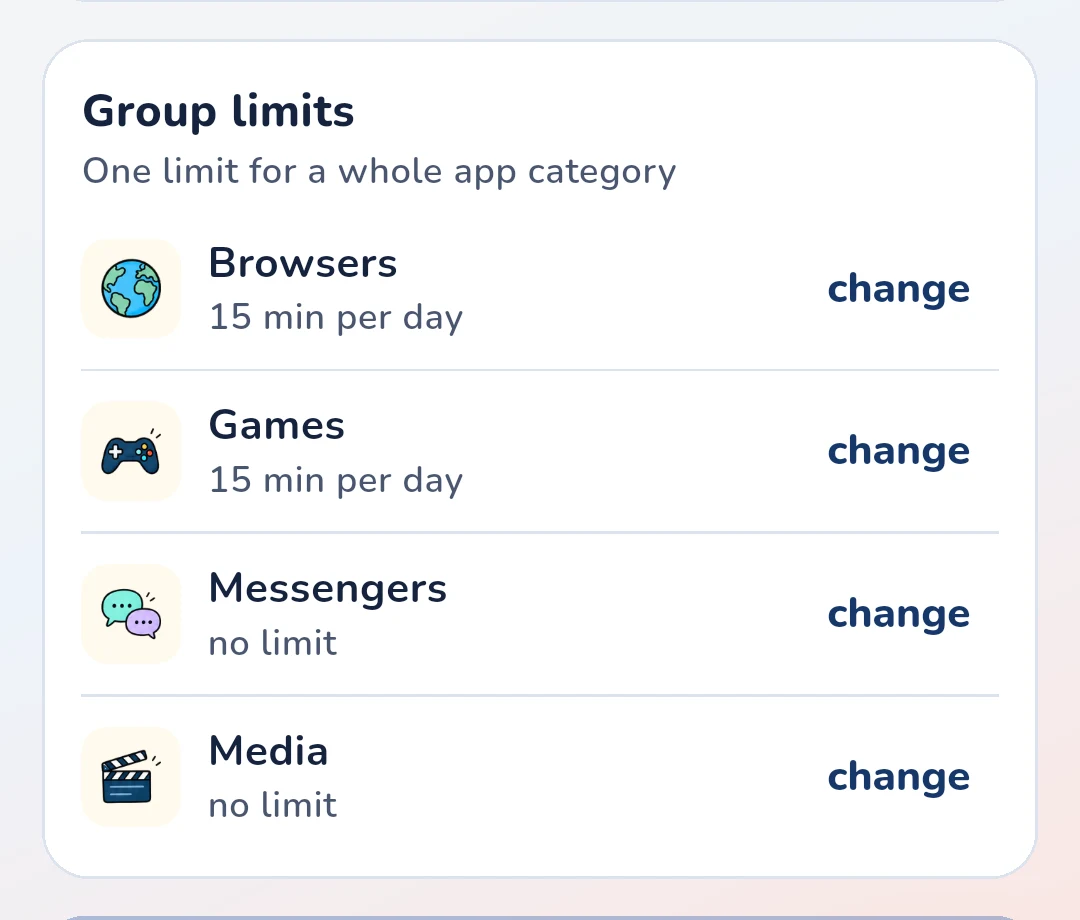
In Gardion, our parental control app, you can turn that agreement into settings. On the Apps tab there's a section called Group limits: one limit covers the whole Games group, so you don't have to set each game separately. When the time runs out, your teen can ask for more minutes, and you decide. That helps you keep the agreement without a fight every evening. The app doesn't treat gaming disorder. To see how it works, visit our page on parental controls for Android.
Who makes the diagnosis
Gaming disorder is diagnosed by a doctor: a psychiatrist, or for a teen, a child and adolescent psychiatrist. We'd suggest starting with your pediatrician or a child psychologist. They can help you decide whether a next step is needed and look at what's behind the gaming. Teens often retreat into games to get away from anxiety, low mood, or trouble at school or with friends. We'd have that conversation sooner rather than later: tension at home is easier to ease once you know where it comes from.
Don't wait for a routine appointment if your teen has stopped going to school, barely sleeps, has stayed in their room for weeks, or says they feel awful. If you think they may hurt themselves, contact emergency services or a crisis line in your country right away. If your teen spends more time on social media than in games, our article on signs of phone addiction explains which warning signs to watch for.
Bring your notes to the appointment: the month it started, which activities your teen dropped, and what rules you've tried at home. The doctor will count the 12 months from them.
Sources
WHO, ICD-11: 6C51 Gaming disorder and QE22 Hazardous gaming, 2025-01 release.
WHO: Gaming disorder, frequently asked questions.
WHO: ICD-10 and ICD-11 mapping tables, 2025-01 release.
American Psychiatric Association: Internet Gaming.
E. Aarseth et al.: Scholars' open debate paper on the World Health Organization ICD-11 Gaming Disorder proposal, Journal of Behavioral Addictions, 2017.
H.-J. Rumpf et al.: Including gaming disorder in the ICD-11, Journal of Behavioral Addictions, 2018.
M. Stevens et al.: Global prevalence of gaming disorder, Australian and New Zealand Journal of Psychiatry, 2021.
Links checked October 18, 2026.
In short
6C51, gaming disorder. Subtypes: 6C51.0 for mainly online and 6C51.1 for mainly offline gaming. There's also QE22, hazardous gaming, which calls for professional advice without a diagnosis.
ICD-10 has no code of its own for it. The WHO's official mapping table links gaming disorder to F63.8, "other habit and impulse disorders." F63.0 is the code for gambling.
Neither ICD-11 nor DSM-5-TR sets a number of hours. A doctor looks at loss of control, what gaming has pushed aside, and the harm to daily life, usually over a year.
Gambling disorder involves betting money: casinos, sports betting, slot machines. It has its own ICD-11 code, 6C50. Gaming disorder is about video games.
A questionnaire can tell you whether there's reason to be concerned, but only a doctor can diagnose it. Different questionnaires also give very different results. If you're worried, see your pediatrician or a child psychologist and bring your notes.
Set limits in 3 minutes
Limits, schedule and anti-bypass protection on Windows and Android. 14 days of full access, no card needed.
Try GardionOr install the parent app now.
Read next
- Signs of phone addiction: when it's just a lot of screen time and when to worrySix signs of phone addiction in teens from the APA advisory, what doesn't count as a sign, what nomophobia means, and when to talk to a pediatrician.
- Phone addiction in kids: what the science says and what parents can doIs phone addiction a real diagnosis? How a habit differs from a problem and a disorder, what researchers disagree about, and what parents can do. With sources.
- Phones before bed: how screens affect kids' and teens' sleepWhy phones before bed hurt kids' sleep more than adults': three ways screens interfere, how much sleep each age needs, and a screen-free last hour.
- Doomscrolling in teens: why the feed is so hard to put down and what helpsWhat doomscrolling is, why teens find the feed so hard to put down, what research says about the brain and mood, and what teens and parents can do.